The Enduring Educational Magic of Children's Word Search Puzzles
In a digital world saturated with flashy animations and rapid-fire games, a simple grid of letters remains a surprisingly potent tool for cognitive development and quiet engagement. The classic word search puzzle, especially when crafted for young minds, is more than just a pastime. It is a structured playground for literacy, focus, and foundational learning skills. The creation of a dedicated resource, such as a professionally formatted interior with 106 unique puzzles ready for a print-on-demand platform like KDP, represents a commitment to delivering this value in a scalable, accessible way. This discussion explores the multifaceted role of word search games for kids, the practical considerations behind producing a high-quality puzzle book, and the real-world applications that make such a resource relevant to a diverse audience.
Cognitive Foundations Built Through Play
At its core, a word search for children is a pattern recognition exercise. The child scans a matrix of letters, seeking sequences that form known words. This process directly reinforces visual scanning skills and improves letter sequencing awareness, a critical pre-reading and reading skill. Unlike passive consumption of media, it requires active, directed attention. The brain must hold the target word in memory, visually track across rows and columns, and disregard irrelevant information. This focused attention is a trainable skill, and word puzzles offer a low-pressure, enjoyable method of practice.
Furthermore, the thematic nature of most children's word searches expands their utility. A puzzle centered on "Animals of the Forest" or "Space Exploration" does not merely list words; it introduces and reinforces vocabulary within a conceptual framework. The child encounters "otter," "falcon," or "nebula" not as isolated terms but as part of a related set. This contextual learning aids retention and can spark curiosity about the broader topic. For educators and parents, a puzzle can serve as an engaging introduction or review session for a unit of study, making the Word Search Game for Kids a versatile supplementary tool.
Beyond Vocabulary: The Hidden Skill Development
The advantages extend beyond literacy. Successfully completing a puzzle provides a tangible sense of accomplishment, boosting confidence and fostering a "can-do" attitude towards problem-solving. The activity also subtly teaches strategy. Children quickly learn to scan systematically—row by row, column by column, or diagonally—developing early analytical approaches. For some, it becomes a calming, meditative activity that offers a break from more stimulating pursuits, helping to cultivate patience and perseverance. In group settings, such as classrooms or after-school clubs, puzzles can encourage collaborative problem-solving and peer learning without the pressure of formal assessment.
Considerations for effective puzzles include careful curation of word lists. Words should be appropriate for the target age group's reading level, mixing familiar terms with a few appropriately challenging ones to stretch abilities. Grid size and complexity must also be scaled; a dense, large grid can overwhelm a young beginner, while a too-simple one may not hold interest. Font choice and clarity are paramount for readability. These are not merely design choices but pedagogical ones, directly impacting the educational efficacy and enjoyment of the activity.
The Practical Craft of a Ready-to-Publish Puzzle Book
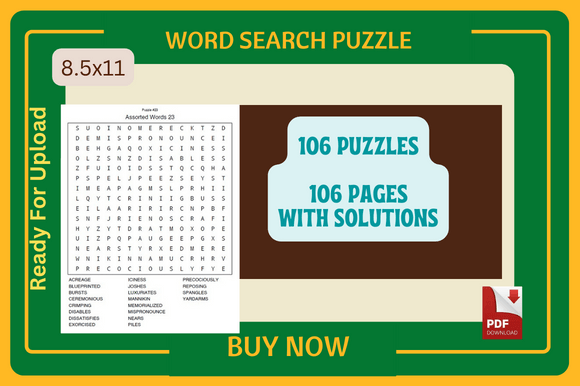
Transitioning from the conceptual benefits to a tangible product requires meticulous attention to practical details. A project titled "Word Search 106 Puzzles KDP Interior Ready for printing" implies a specific set of professional standards. The phrase "KDP Interior Ready" signifies that the digital file is formatted precisely for Amazon's Kindle Direct Publishing platform, requiring no further modification by the buyer before upload and sale. This readiness is a key value proposition for entrepreneurs, educators, and creators who wish to offer a physical puzzle book without engaging in complex graphic design or layout work.
The specification of "100 formatted and tested for KDP Trim size 8.5″ x 11″ paper no bleed" addresses critical technical requirements. The trim size is a standard for many workbooks and activity books. "No bleed" indicates that all content, including borders or any design elements, is safely within the margins, ensuring nothing will be cut off during the physical printing and binding process. This is essential for a professional outcome. Testing the file before finalization prevents costly errors and customer dissatisfaction, reflecting a commitment to quality.
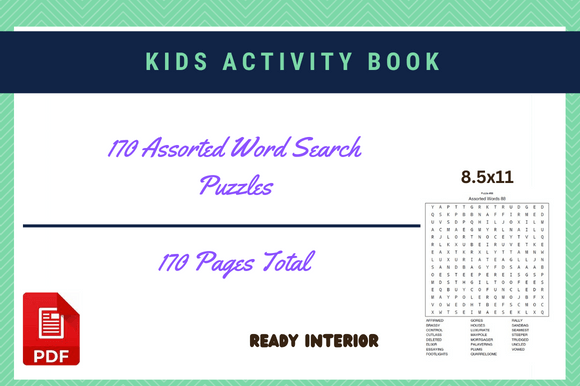
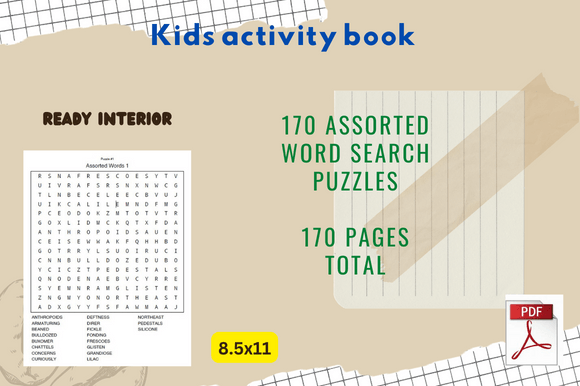
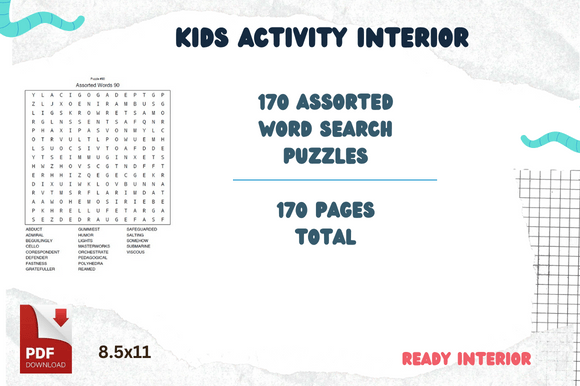
The structure of "106 Pages puzzles. 106 Pages in total. 1 Puzzles per page" describes a clean, user-friendly layout. A single puzzle per page eliminates clutter, gives the child ample space to work, and prevents the distraction of other puzzles on the same sheet. It also allows for easy reproduction in classroom settings, where a teacher might want to print or photocopy individual pages for specific days or students. The total page count suggests a substantial resource, providing long-term value and variety, which is important for both retail appeal and practical usage.
Real-World Applications and User Scenarios
The audience for such a resource is broad, and its applications are equally varied.
For parents and caregivers, it serves as a readily available activity for rainy days, travel, or quiet time at home. It can be part of a structured homeschooling curriculum or a fun supplement to schoolwork. The physical book format offers a screen-free alternative that is easy to pack and requires no electricity or software.
For educators and teachers, whether in traditional schools, tutoring centers, or summer camps, a book of 106 puzzles represents a reservoir of ready-made activities. They can select puzzles that align with current lessons—science vocabulary, historical terms, literary characters—to reinforce learning in an engaging way. The single-page format simplifies distribution.
For business owners and creators in the self-publishing space, such a professionally prepared interior is a product component. It allows them to quickly launch a niche activity book on a platform like Amazon KDP, targeting markets interested in educational tools, children's activities, or puzzle books. The "ready-to-upload" aspect minimizes production overhead.
For hobbyists and researchers in child development or educational methods, a well-crafted puzzle book can be a tool for observation. They can study how children of different ages or abilities approach the puzzles, noting strategies, frustration points, and vocabulary acquisition, using the structured format as a consistent test bed.
The Integral Role of Design and Content Generation
The statement "All of content is New generate." underscores a final, crucial point: originality. In a market filled with repetitive content, newly generated puzzles ensure a fresh experience. Each puzzle’s word list and letter grid arrangement are unique, preventing monotony for the child who might work through the entire book. This novelty maintains engagement and challenge. From a commercial and ethical standpoint, it also ensures the product is not a duplication of existing copyrighted material, which is vital for KDP compliance and brand integrity.
The design workflow for creating such a resource involves several stages: thematic planning for the 106 puzzles, age-appropriate word list generation, algorithmic or manual grid construction to place the words, rigorous checking for errors and duplicate puzzles, and finally, precise formatting into the required page layout with clear instructions and perhaps a consistent visual style. The final output—a single, tested PDF file—is the culmination of this process, designed for maximum utility and ease of use by the end purchaser.
In essence, a children's word search puzzle book bridges a gap between simple play and structured learning. It leverages a timeless activity format, updates it with professional production standards, and delivers it in a way that serves multiple real-world needs. Whether the goal is to support a child's literacy journey, to stock a classroom with versatile resources, or to build a product in a growing niche market, the value lies in the intersection of thoughtful educational design and practical, ready-to-use execution.