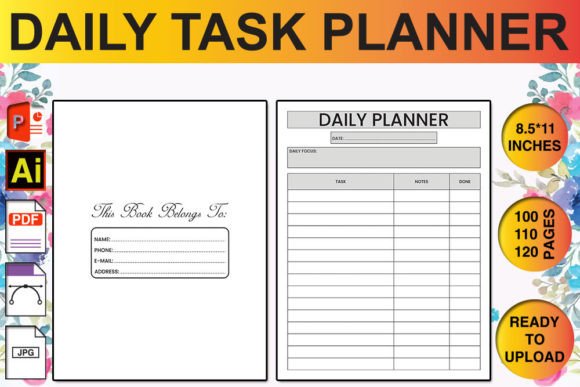
The Daily Task Planner Log Book KDP Interior: A Foundation for Productivity and Publishing
For anyone navigating the demands of modern work and life—from entrepreneurs managing multiple projects to freelancers balancing creative work with administrative tasks—a structured approach to daily planning is non-negotiable. The Daily Task Planner Log Book KDP Interior serves as a specialized tool designed for this purpose, but its utility extends far beyond personal use. It represents a professionally crafted, ready-to-publish foundation for those looking to create and sell a physical productivity tool. This interior is a complete package, offering not just a print-ready PDF but also fully customizable source files in PowerPoint, Illustrator, and InDesign formats. Understanding where this asset fits into your broader workflow, whether as a user or a creator, is key to leveraging its full potential.
Integrating a Planner Interior into Your Creator or Professional Workflow
The journey typically begins with a need: either a personal requirement for a more systematic daily task management system or a business opportunity in the thriving self-publishing market, particularly on platforms like Amazon KDP (Kindle Direct Publishing). A generic notebook often falls short because it lacks the specific structure—dedicated sections for priorities, time blocks, notes, and reviews—that transforms random jotting into actionable logging. The Daily Task Planner Log Book KDP Interior addresses this by providing that structure in a clean, functional design. For the end-user, it’s a ready-made system. For the creator or publisher, it’s a starting point that eliminates weeks of design work.
Consider the workflow of a small business owner. Before adopting a new planning method, they assess their current chaos of sticky notes and digital app overload. Implementing a dedicated log book forces a daily ritual: morning prioritization, midday tracking, and evening review. This physical artifact interacts with their digital tools; the log book becomes the central, unhurried reference point, while digital calendars handle alerts and scheduling. The key is consistency, and a well-designed interior promotes that by making the logging process intuitive and efficient.
From Source Files to Finished Product: A Practical Publishing Process
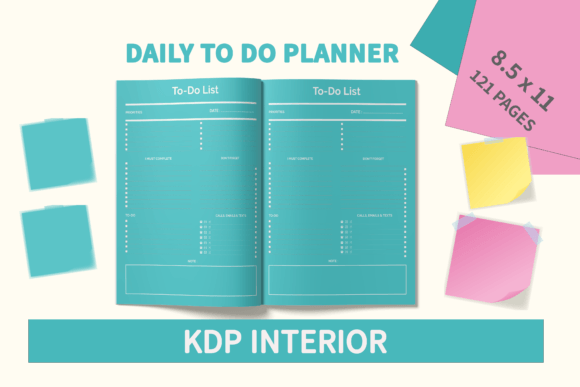
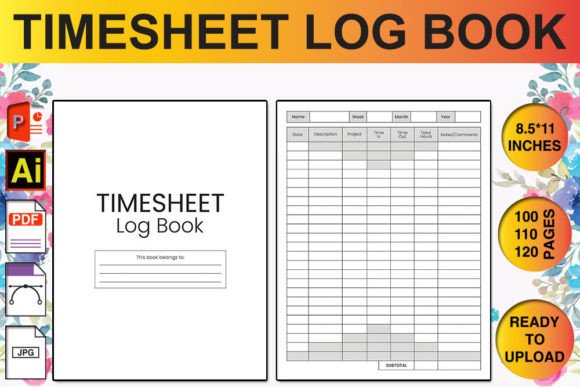
For creators targeting the KDP marketplace, the process is distinctly practical. The provided specification—trim size of 8.5" x 11", options for 100, 110, or 120-page interiors, and source files alongside the PDF—is not just a list of features but a blueprint for action. Upon download, you immediately have the core asset: a high-quality, print-ready PDF formatted to KDP’s requirements with no bleed, perfect for straightforward upload. This is the fastest route to market. However, the true long-term value lies in the PPTX, AI, and INDD files. These allow for deep customization, enabling you to adapt the planner to niche audiences—perhaps educators needing a section for lesson notes or marketers tracking campaign metrics.
The integration with other tools here is direct. You might open the Illustrator (.AI) file to modify the header graphics using your brand colors, then switch to the InDesign (.INDD) file to adjust the page layout or font hierarchy for better readability. PowerPoint (.PPTX) files offer an accessible route for those less familiar with professional design software. This flexibility ensures the interior can evolve alongside your product line or personal planning needs. Preparation involves having the appropriate software, but the work starts from a polished baseline, drastically reducing quality control concerns.
Structuring Your Day: Implementation Tips for Effective Use
Whether you are using the planner yourself or publishing it for others, understanding its practical application is crucial. The interior’s design typically segments the day into manageable components. A successful implementation starts with a brief morning session—no more than ten minutes—to identify three to five critical tasks for the day. This act of selection, forced by the layout’s constraints, enhances focus. During the day, the log serves as a live document; checking off completed items provides a visual reward, while jotting down unexpected tasks in the notes section prevents derailment.
An often overlooked phase is the end-of-day review. This is where the log book transitions from a daily tool to a long-term resource. Briefly reviewing what was accomplished versus what was planned provides concrete data for self-analysis. Over weeks, patterns emerge—perhaps certain types of tasks consistently overrun their time blocks, indicating a need for process adjustment. For the publisher, offering guidance on this review process within the book’s introduction can significantly increase its perceived value and usability for the customer.
- Start Simple: Don’t attempt to fill every line or box on the first day. Use the core task list and gradually incorporate the additional note sections as you become comfortable with the format.
- Combine with Digital Tools: Use the planner for strategic thinking and priority setting, while relying on digital alarms for time-specific reminders. This hybrid approach balances depth with convenience.
- Customize for Your Context: If you are using the source files, think about your target audience. A planner for students might benefit a weekly goal overview page, while one for project managers could integrate a risk or issue log column.
Ensuring Consistency and Long-Term Usability
The durability of any planning system hinges on its ability to become a seamless part of your routine. The physical nature of a Daily Task Planner Log Book, built from this KDP interior, offers a tangible advantage over purely digital solutions. It exists in a specific place, demanding a small but deliberate engagement that can foster greater mindfulness compared to a swipe-and-tap interface. For the publisher, ensuring the print quality is high—a given with the print-ready PDF—and the paper choice (when ordering a proof copy) is pleasant to write on, are critical final steps for user satisfaction.
Long-term use also depends on adaptability. The availability of different page counts (100, 110, 120) allows users or publishers to choose a volume that matches a desired usage period—a 100-page book for a quarterly focus, for instance. For the creator, having multiple length options ready to go means you can quickly test different product variants in the marketplace without starting each design from scratch. This operational efficiency is a significant benefit, allowing you to focus more on marketing and customer engagement rather than repetitive design tasks.
Beyond the Page: The Planner in a Broader Ecosystem
A daily task planner does not operate in isolation. It functions within an ecosystem of other resources, methods, and decisions. For the professional, it might feed into weekly team meetings, where insights from the personal log inform project updates. For the creative freelancer, the notes section might capture nascent ideas that later get transferred to a dedicated idea bank or mood board. The planner interior, therefore, is not an endpoint but a nexus—a daily capture point that fuels other systems.
From a publishing perspective, the product interacts with key decisions about branding, pricing, and market positioning. The customizable source files empower you to ensure the planner aligns perfectly with your other products or your author brand. You can maintain visual consistency across your entire KDP catalog, building recognizable quality that encourages repeat customers. Furthermore, offering a product with ready-to-upload files and professional source assets can itself be a unique selling point, appealing to a segment of customers who value both immediate utility and the potential for customization.
Ultimately, whether your goal is to enhance your personal productivity or to build a successful self-publishing stream, the Daily Task Planner Log Book KDP Interior provides a practical, process-oriented foundation. It removes the initial barriers of design and formatting, offering a clear path from concept to implementation. By integrating it thoughtfully into your daily rituals or your business workflow, you transform a simple interior file into a powerful tool for organization, execution, and growth.